How did glasses become a fashion accessory?
Today, glasses hold an essential place in the world of luxury and fashion. Far more than a simple tool for vision correction, they have become a true fashion accessory capable of transforming a silhouette, asserting a personality, and adding a trendy touch to every outfit.
Whether wearing prescription glasses or sunglasses, the choice of a frame now reflects a style, an identity, and sometimes even a lifestyle. Yet, glasses have not always been viewed in this way.
How did this object, originally designed to improve vision, become a symbol of style and a staple of contemporary fashion?
The history of glasses: from functional origins to a prestigious object
The first glasses appeared in Italy in the 13th century. Known as spectacles, they consisted of two round lenses set in rudimentary frames, without temples.
At that time, their function was exclusively practical: they allowed for easier reading and facilitated the intellectual work of scholars, clergy, and scientists.
Glasses were then associated with knowledge, experience, and age. They had no aesthetic dimension and were not considered fashion accessories.

From the 17th century onwards, technical progress gradually transformed their design. Frames became more comfortable and refined. Precious materials such as gold, silver, and tortoiseshell became particularly prized by the European aristocracy.
Glasses then began to transcend their simple utilitarian function to become a sign of social distinction. Owning a frame made from noble materials testified not only to a certain wealth, but also to belonging to a cultured elite.
This evolution marked glasses' first steps into the world of luxury.
The style revolution: when glasses entered fashion
Thanks to industrialization, glasses became more accessible. At the same time, cinema and popular culture gave them unprecedented visibility.
The icons of the silver screen helped permanently transform the public image of glasses. Some frames even became legendary.
In the 1950s and 1960s, Audrey Hepburn popularized glamorous oversized glasses in Breakfast at Tiffany's. Later, the aviator glasses worn by Tom Cruise in Top Gun became a symbol of modernity and character.

Harry Potter's round frames marked an entire generation, while John Lennon's became a timeless symbol of counterculture and creative freedom.
Brigitte Bardot also popularized a style of XXL round glasses, often tinted, making her sense of style even more unique.

More recently, the optical references in the film The Devil Wears Prada helped establish glasses as an accessory associated with professional elegance and the world of fashion.
Jack Nicholson himself considers glasses an essential detail of his personality and image; “With my sunglasses, I'm Jack Nicholson. Without them, I'd be fat and 60 years old.”
Glasses then ceased to be merely a functional object. They became a fashion accessory in their own right and even fashion references.
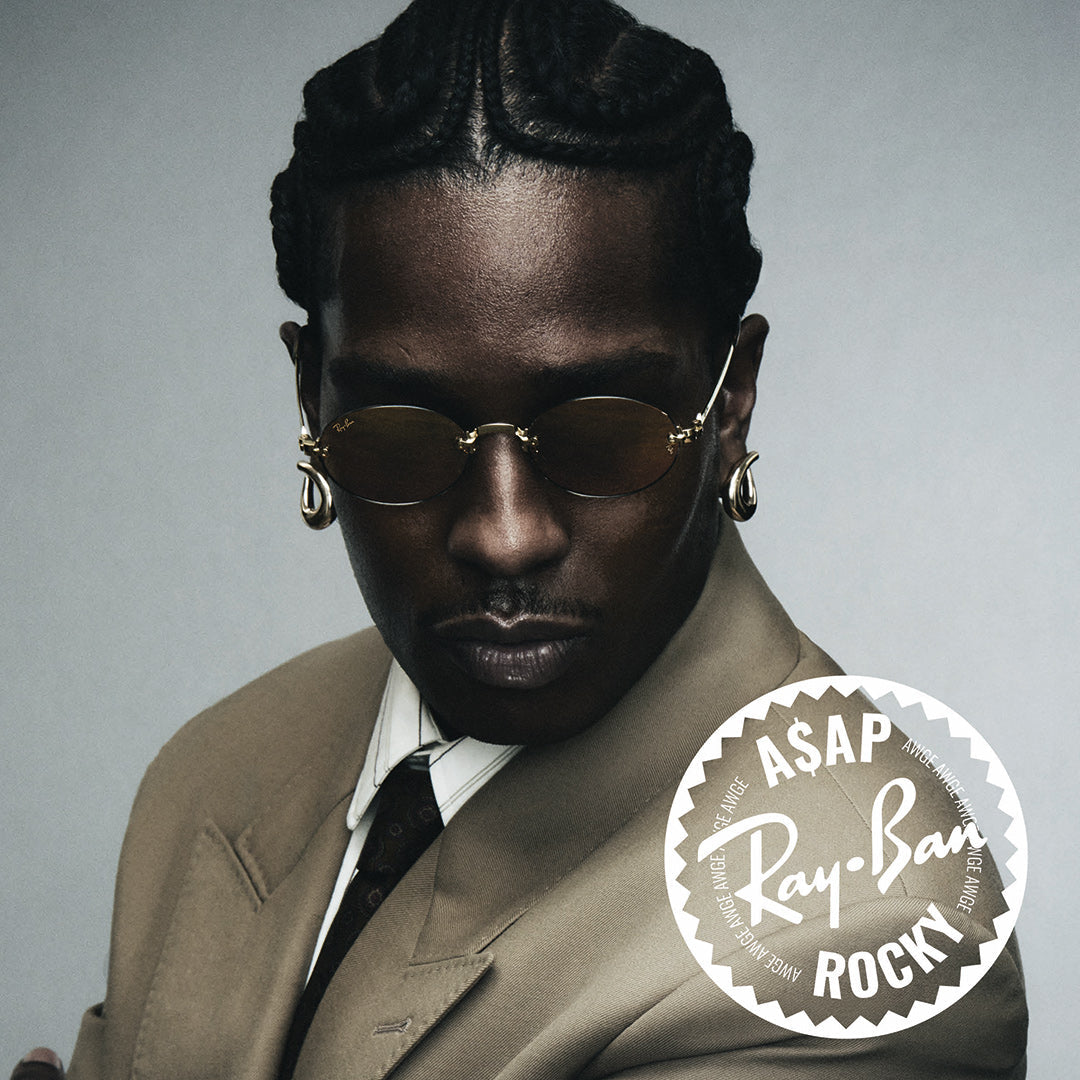
For some time now, major brands have incorporated glasses into their collections, considering them an essential element of their creations. Their optical campaigns are embodied by muses, influential celebrities, and fashion or even music icons, such as A$AP Rocky as the new artistic director at Ray-Ban, Nicole Kidman, the face of Chanel Eyewear, and Bella Hadid, featured in the Saint Laurent Eyewear campaign.

For the first time, consumers choose their glasses not only to see better, but also to express their personal style and follow trends.
Glasses today: an extension of personality
In today's society, where image plays a central role, glasses constitute a true visual language.
The shape, color, material, or even size of a frame immediately influences how others perceive us.
A minimalist frame often evokes sophistication and understated elegance. A bolder pair conveys a creative and assertive personality. Timeless designs, meanwhile, appeal to those seeking a lasting style, far from fleeting trends.

This is what makes glasses unique among fashion accessories: they accompany the face and directly contribute to the visual identity of the person wearing them.

Today, choosing a pair of luxury glasses or a high-end frame is no longer just about correcting your vision. It is also about finding a model capable of reflecting your personality, lifestyle, and sense of style.
The expertise behind choosing a frame
French, Italian, and Japanese workshops, true temples of artisanal know-how, give birth to the most refined luxury eyeglass frames.
From the French Jura to the factories of Belluno, via the precision workshops in Japan, each pair is the result of centuries-old tradition. Rigorous selection of noble materials, meticulous polishing, precise assembly, and scrupulous quality control: every step is carried out with absolute demand and precision, guaranteeing impeccable quality.

A superior-quality frame is not limited to its materials. Its design is based on in-depth studies of ergonomics and proportions: lens width, bridge size, face curvature, and weight distribution are meticulously considered to guarantee optimal comfort and a natural harmony with the face.
Since the beginning of the 20th century, iconic houses have made glasses a true accessory of style and identity. Choosing a pair of luxury glasses today means selecting an object that combines decades of innovation, artisanal heritage, and timeless design.
At Malen Square, we honor this heritage. Each frame is selected not only for its design, but also for its manufacturing quality, comfort, and ability to transcend trends without ever losing its timeless elegance. Because beyond fashion, a beautiful pair of glasses always tells something about the person wearing them.
What if true elegance ultimately consisted of choosing a frame that reveals your personality?